Introduction
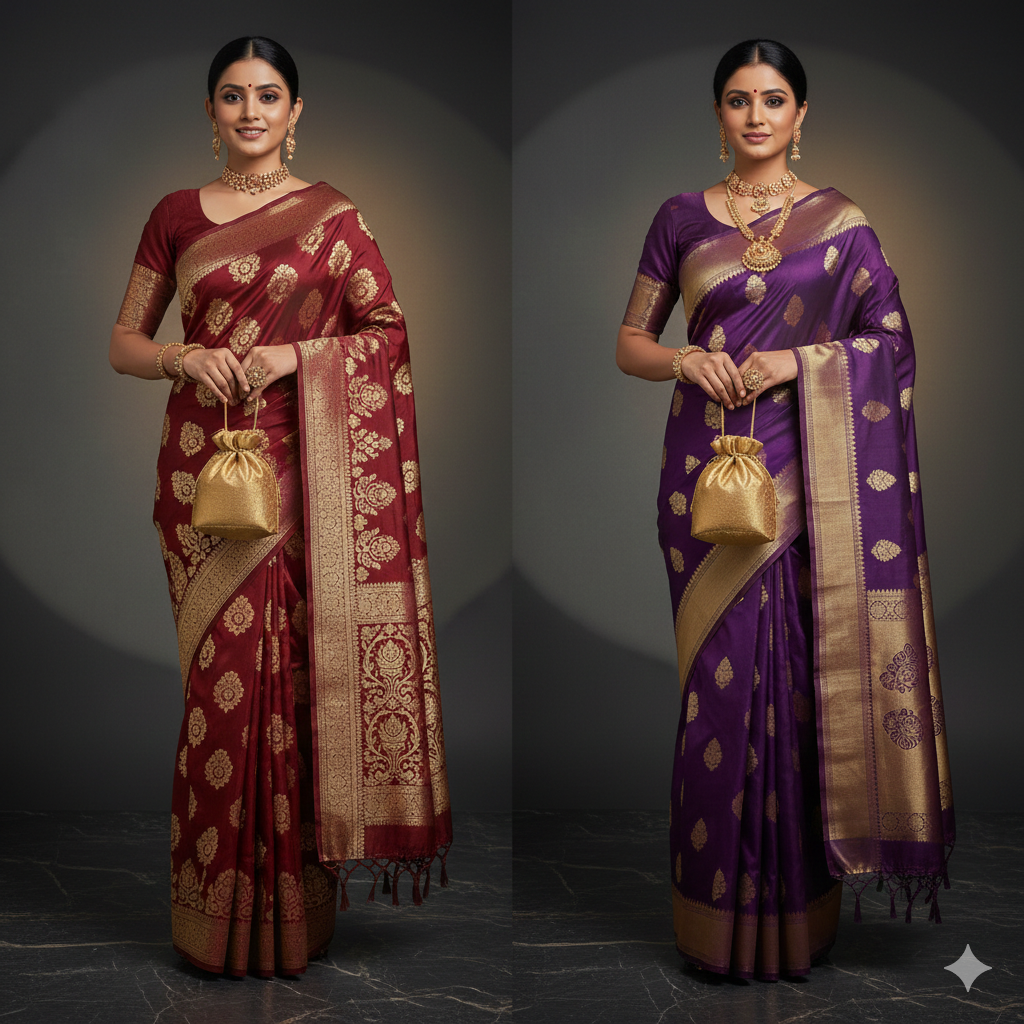
Sarees are one of the most iconic garments in Indian fashion, celebrated for their elegance, cultural depth, and timeless appeal. Across generations, sarees have played a central role in festivals, weddings, and milestone moments, symbolizing tradition, craftsmanship, and grace. Among the many varieties available today, Banarasi sarees and Kanjivaram sarees stand out as two of the most revered and sought-after styles.
Both sarees are deeply rooted in Indian heritage and are often associated with luxury, tradition, and special occasions. However, they differ significantly in terms of weaving techniques, design aesthetics, texture, and usage. For shoppers—especially those buying online—choosing between Banarasi and Kanjivaram sarees can be confusing.
The purpose of this blog is to help you understand the key differences between Banarasi and Kanjivaram sarees and guide you in selecting the one that best suits your personal style, occasion, and budget. Whether you are a bride, a wedding guest, or a saree enthusiast, this comparison will help you make a confident purchase decision.
What Are Banarasi Sarees?
Banarasi sarees originate from Varanasi (formerly Banaras) in Uttar Pradesh and are known for their opulent appearance and fine craftsmanship. These sarees have a history that dates back several centuries and were once patronized by royalty and aristocracy. Traditionally worn by brides and women of high social standing, Banarasi sarees are synonymous with grandeur and elegance.
Banarasi sarees are usually woven using silk and decorated with elaborate brocade work. The weaving process involves intricate patterns created using gold and silver zari threads, resulting in rich textures and ornate designs. Over time, Banarasi sarees have evolved to include lighter versions while retaining their classic charm.
Fabrics and Designs
Banarasi sarees are made using various fabric bases, including pure silk, organza, georgette, and blended silks. Their designs are inspired by Mughal art and often feature floral motifs, paisleys, creepers, and jaal patterns. The pallu and borders are typically heavily embellished, making these sarees visually striking.
Key Features of Banarasi Sarees
- Luxurious silk fabric with rich brocade work
- Intricate zari patterns inspired by Mughal aesthetics
- Smooth texture and elegant drape
- Lighter compared to South Indian silks
Popular Occasions for Wearing Banarasi Sarees
- Weddings and bridal ceremonies
- Engagements and receptions
- Festivals and formal celebrations
Care and Maintenance Tips
- Dry clean only to preserve zari and silk
- Store in muslin cloth to prevent moisture damage
- Avoid direct sunlight for prolonged periods
What Are Kanjivaram Sarees?
Kanjivaram sarees, also known as Kanchipuram sarees, originate from the town of Kanchipuram in Tamil Nadu. These sarees are celebrated for their durability, vibrant colors, and bold traditional designs. Woven using pure mulberry silk, Kanjivaram sarees are considered heirloom pieces and are often passed down through generations.
The weaving technique of Kanjivaram sarees is unique and highly labor-intensive. The body and border of the saree are woven separately and then interlocked using a strong joint, ensuring long-lasting strength and structure. This craftsmanship gives Kanjivaram sarees their distinctive weight and rich feel.
Silk and Weaving Technique
Kanjivaram sarees use high-quality mulberry silk combined with thick zari threads, often made with silver coated in gold. The designs are inspired by temple architecture, mythology, and nature, giving the sarees a traditional and regal appearance.
Key Features of Kanjivaram Sarees
- Heavy, durable silk fabric
- Bold contrasting borders and pallus
- Temple motifs, checks, and stripes
- Long-lasting weave suitable for heirloom storage
Popular Occasions for Wearing Kanjivaram Sarees
- Traditional weddings (especially South Indian weddings)
- Religious ceremonies and rituals
- Grand festive occasions
Care and Maintenance Tips
- Dry clean recommended for longevity
- Store folded with zari portions inside
- Refold periodically to avoid fabric stress
Banarasi vs Kanjivaram Sarees
Understanding the differences between Banarasi and Kanjivaram sarees can make your buying decision much easier. While both are luxurious and traditional, they cater to different preferences and occasions.
Fabric and Texture
Banarasi sarees are generally lighter, smoother, and softer to drape. Kanjivaram sarees are heavier, sturdier, and have a crisp structure that holds shape well.
Design and Aesthetics
Banarasi sarees are known for delicate, intricate patterns and subtle elegance. Kanjivaram sarees feature bold motifs, vibrant colors, and strong contrasts that create a striking look.
Pricing and Budget Considerations
Banarasi sarees are available across a wide price range, from affordable options to high-end bridal pieces. Kanjivaram sarees are usually more expensive due to pure silk usage and labor-intensive weaving.
Versatility for Different Occasions
Banarasi sarees are versatile and suitable for both weddings and formal events. Kanjivaram sarees are best reserved for traditional ceremonies and grand occasions.
Pros and Cons
Banarasi Sarees
- Pros: Lightweight, elegant, versatile, easier to carry
- Cons: Zari may require extra care
Kanjivaram Sarees
- Pros: Extremely durable, rich traditional look, heirloom quality
- Cons: Heavy weight, less suitable for long wear
Customer Preferences and Trends
Modern brides and urban shoppers often prefer Banarasi sarees for comfort and contemporary styling, while traditional buyers favor Kanjivaram sarees for rituals and cultural authenticity.
Which Saree Should You Buy?
Choosing between Banarasi and Kanjivaram sarees ultimately depends on your personal needs and preferences.
If you prefer elegance with comfort and want a saree that works across multiple occasions, Banarasi sarees are an excellent choice. They are ideal for brides who want a regal look without heavy weight and for shoppers looking for versatile luxury.
Kanjivaram sarees are perfect if you value tradition, durability, and cultural significance. They are best suited for wedding ceremonies, religious rituals, and collectors who appreciate heirloom-quality sarees.
Quick Selection Tips
- Choose Banarasi if you want lightweight luxury and intricate designs
- Choose Kanjivaram if you want bold tradition and long-lasting silk
- Consider your budget, occasion, and comfort level before buying
Conclusion
Both Banarasi and Kanjivaram sarees are masterpieces of Indian textile heritage, each offering unique beauty and craftsmanship. Banarasi sarees charm with their delicate artistry and versatility, while Kanjivaram sarees impress with their strength, vibrancy, and traditional grandeur. Understanding their differences in fabric, design, and usage helps you make a well-informed decision.
When choosing between the two, consider your personal style, the occasion, and how you plan to wear and preserve the saree. A thoughtfully chosen saree is not just an outfit—it is an investment in tradition and elegance.
Call to Action (CTA)
Explore our exclusive collection of Banarasi sarees and Kanjivaram sarees, carefully curated to suit every style and occasion. Whether you’re looking for a bridal masterpiece or a timeless traditional saree, we have something special for you.
Shop now and bring home the elegance of India’s finest saree traditions.