Introduction
Sarees are one of the most enduring and versatile garments in Indian fashion, admired for their elegance, cultural significance, and adaptability across occasions. From everyday wear and office dressing to weddings and festive celebrations, sarees continue to evolve while staying rooted in tradition. Among the many styles available today, printed sarees and embroidered sarees remain two of the most popular choices for women shopping online.
Choosing between a printed and an embroidered saree can significantly influence your overall look, comfort, and budget. While printed sarees are loved for their ease, affordability, and modern appeal, embroidered sarees are prized for their craftsmanship, richness, and celebratory charm. Each style serves a different purpose and caters to different fashion needs.
This blog explores the key differences between printed and embroidered sarees, their features, advantages, ideal occasions, and styling versatility—helping you decide which saree style best suits your lifestyle, preferences, and wardrobe goals.
Understanding Printed Sarees
Definition and Characteristics
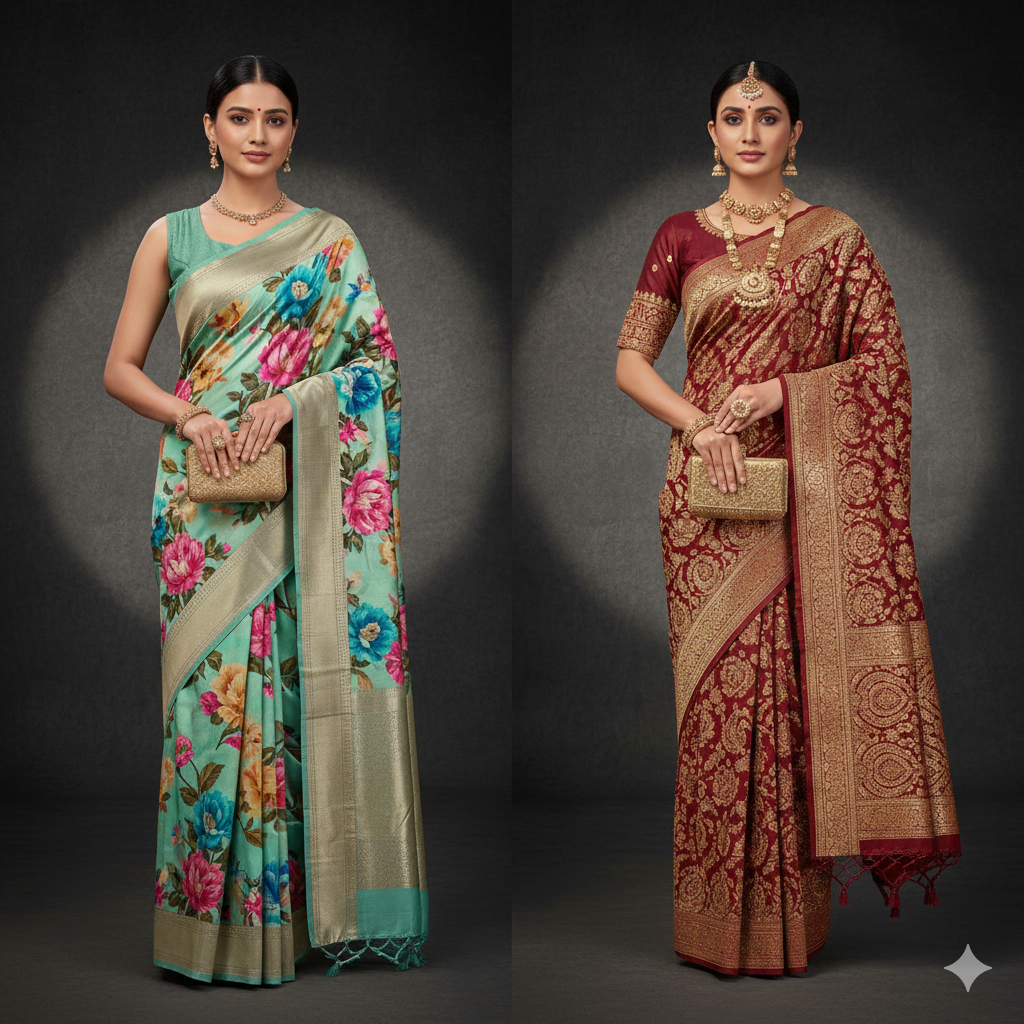
Printed sarees feature patterns, motifs, or designs that are applied directly onto the fabric using various printing techniques. These sarees are known for their lightweight feel, vibrant visuals, and wide design variety. They are especially popular among women who prefer effortless styling and contemporary aesthetics.
Printed sarees can range from minimal, subtle designs to bold, artistic expressions, making them suitable for both casual and semi-formal wear.
Types of Prints Used in Sarees
- Digital Prints
- Sharp, detailed patterns
- Modern designs, florals, abstracts, and scenic prints
- Sharp, detailed patterns
- Block Prints
- Handcrafted using wooden blocks
- Traditional motifs with artisanal appeal
- Handcrafted using wooden blocks
- Tie-Dye Prints
- Unique color blends and patterns
- Popular for festive and casual ethnic looks
- Unique color blends and patterns
- Screen Prints
- Uniform and vibrant designs
- Suitable for everyday and office wear
- Uniform and vibrant designs
Popular Materials Used for Printed Sarees
- Cotton for comfort and breathability
- Georgette and chiffon for flowy drapes
- Crepe and satin for polished looks
- Linen and rayon for contemporary styling
Advantages of Printed Sarees
- Versatility in Styling
- Easy to dress up or down
- Suitable for daily wear, work, and casual outings
- Easy to dress up or down
- Affordability
- Generally budget-friendly
- Wide price range for all shoppers
- Generally budget-friendly
- Easy Maintenance
- Simple washing and storage
- Lightweight and travel-friendly
- Simple washing and storage
Ideal Occasions for Printed Sarees
- Office wear and daily use
- Casual gatherings and brunches
- Daytime events and travel
- Minimal festive celebrations
Printed sarees are perfect for women who value comfort, convenience, and modern style.
Exploring Embroidered Sarees
Definition and Characteristics
Embroidered sarees feature decorative patterns created using threads, beads, sequins, or metallic elements stitched onto the fabric. These sarees are often associated with luxury, tradition, and craftsmanship. Embroidery adds depth, texture, and richness, making these sarees ideal for special occasions.
Unlike printed sarees, embroidered sarees focus on tactile detailing and visual grandeur rather than surface patterns alone.
Types of Embroidery Used in Sarees
- Hand Embroidery
- Crafted by skilled artisans
- Intricate and unique designs
- Crafted by skilled artisans
- Machine Embroidery
- Precise and uniform detailing
- More affordable than hand embroidery
- Precise and uniform detailing
- Zari and Zardosi Work
- Metallic thread embroidery
- Traditional and regal appeal
- Metallic thread embroidery
- Thread and Sequin Embroidery
- Adds subtle shine and elegance
- Suitable for modern festive wear
- Adds subtle shine and elegance
Common Fabrics Used for Embroidered Sarees
- Silk and silk blends for traditional looks
- Net and organza for layered embroidery
- Velvet for rich and luxurious appeal
- Georgette and chiffon for balanced elegance
Advantages of Embroidered Sarees
- Elegance and Sophistication
- Instantly elevates your look
- Ideal for celebrations and formal events
- Instantly elevates your look
- Unique Craftsmanship
- Showcases skilled artistry
- Often feels exclusive and special
- Showcases skilled artistry
- Durability and Longevity
- High-quality embroidery lasts for years
- Often treasured as occasion wear
- High-quality embroidery lasts for years
Suitable Events for Embroidered Sarees
- Weddings and receptions
- Festivals and traditional ceremonies
- Formal celebrations and evening events
- Special family occasions
Embroidered sarees are a go-to choice when you want to make a statement with elegance and tradition.
Comparative Analysis: Printed vs Embroidered Sarees
Visual Appeal
- Printed Sarees
- Light, fresh, and contemporary
- Focus on patterns and colors
- Light, fresh, and contemporary
- Embroidered Sarees
- Rich, textured, and ornate
- Focus on detailing and craftsmanship
- Rich, textured, and ornate
Cost Considerations
- Printed Sarees
- Generally budget-friendly
- Ideal for frequent use
- Generally budget-friendly
- Embroidered Sarees
- Higher price due to labor and materials
- Considered investment pieces
- Higher price due to labor and materials
Maintenance and Care
- Printed Sarees
- Easy to wash and store
- Low maintenance
- Easy to wash and store
- Embroidered Sarees
- Often require dry cleaning
- Need careful storage
- Often require dry cleaning
Versatility in Styling and Occasions
- Printed Sarees
- Highly versatile
- Suitable for everyday and semi-formal occasions
- Highly versatile
- Embroidered Sarees
- Occasion-specific
- Best for festive and formal wear
- Occasion-specific
Fashion Trends and Influences
Current Trends in Printed Sarees
- Minimal prints with clean color palettes
- Nature-inspired and abstract designs
- Contemporary florals and geometric patterns
Current Trends in Embroidered Sarees
- Subtle embroidery instead of heavy work
- Focused embellishment on borders and pallus
- Balanced designs combining tradition and modernity
Celebrity and Influencer Styles
- Printed sarees styled for travel, promotions, and casual events
- Embroidered sarees worn at weddings, festivals, and red-carpet appearances
Cultural Significance and Modern Adaptations
- Printed sarees reflect modern lifestyles and global influences
- Embroidered sarees preserve traditional artistry while adapting to new silhouettes
Both styles continue to evolve, catering to diverse fashion preferences.
How to Choose the Right Saree for You
Personal Style Considerations
- Choose printed sarees if you prefer minimal and modern looks
- Opt for embroidered sarees if you love rich, traditional aesthetics
Body Type and Saree Selection
- Lightweight printed sarees suit all body types
- Embroidered sarees with strategic detailing enhance structure
Seasonal Preferences
- Printed cotton and chiffon sarees are ideal for warmer seasons
- Embroidered silk and velvet sarees work well in cooler weather
Understanding your lifestyle and usage needs helps you make the right choice.
Conclusion
Both printed and embroidered sarees have their own charm and purpose. Printed sarees offer comfort, affordability, and everyday elegance, making them perfect for modern lifestyles. Embroidered sarees, on the other hand, bring richness, craftsmanship, and timeless beauty, ideal for special occasions and celebrations.
Rather than choosing one over the other, a well-rounded wardrobe includes both styles. By understanding their differences, advantages, and suitability, you can confidently invest in sarees that match your personality, needs, and occasions.
Call to Action (CTA)
Explore our curated collection of printed sarees and embroidered sarees, designed to suit every style and celebration. From everyday elegance to festive grandeur, discover sarees that complement your wardrobe effortlessly.
Share your favorite saree styles with us in the comments and start your shopping journey today with designs that truly reflect your taste.